
M3/min To CFM Conversion
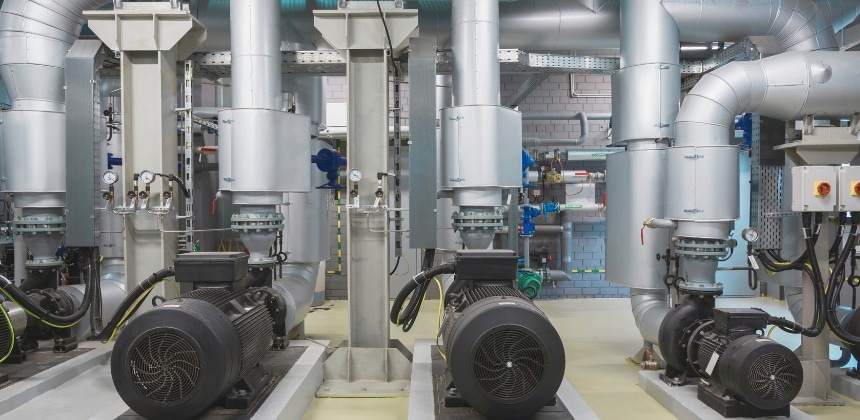
In the field of water treatment and pumping equipment, it is important to understand the conversion of flow units. Different regions and industries use different flow units, making it a challenge to understand and compare data properly. This article will help you know how to convert flow units from cubic meters per minute (m³/min) to cubic feet per minute (cfm) and explore what this means in practice in pump applications.
Basic concepts of flow units
- Cubic meters per minute (m³/min) is a unit of flow in the International System of Units (SI) that expresses the number of cubic meters passing per minute. It is commonly used in industry and science, especially when describing the flow of liquids and gases.
- Cubic feet per minute (cfm) is an imperial unit used primarily in the United States and a few other countries. It expresses the number of cubic feet passing per minute and is commonly used to describe airflow and other gas flows.
Unit Conversion Formula
The formula for converting flow rate from cubic meters per minute to cubic feet per minute
1 m³/min=35.3147 cfm

Illustrative Calculations
Suppose a pump has a flow rate of 5 m³/min. convert this to cfm as follows
- 5 m³/min×35.3147 cfm/m³/min=176.5735 cfm
- Therefore, a flow rate of 5 m³/min equals approximately 176.57 cfm.
| CFM | M3/min |
| 1 | 35.3147 |
| 2 | 70.6294 |
| 3 | 105.9441 |
| 4 | 141.2588 |
| 5 | 176.5735 |
| 6 | 211.8882 |
| 7 | 247.2029 |
| 8 | 282.5176 |
| 9 | 317.8323 |
| 10 | 353.147 |
Practical Application of Pumps In Water Treatment
Design and Selection
Equipment selection: When designing a water treatment system, accurate flow data is critical to selecting the proper pumps and other equipment.
For example:
300 CFM ÷ 35.3147 ≈ 8.5 m³/min
Performance optimization: Understanding and accurately converting flow units can help optimize pump performance, ensuring that the system operates at its best, reducing energy consumption and operating costs.
Pump Equipment Maintenance and Optimization
Troubleshooting: Understanding flow unit conversions helps technicians accurately evaluate equipment performance during routine maintenance and troubleshooting. For example, if a pump’s actual output is lower than the expected m³/min value, technicians can convert the flow rate to CFM to compare it with the performance data provided by the manufacturer.
System Upgrades: When upgrading or expanding a system, proper flow unit conversion ensures that new equipment is compatible with the existing setup, preventing operational issues or system failures caused by inconsistent flow units.
Suitable Pump Selection
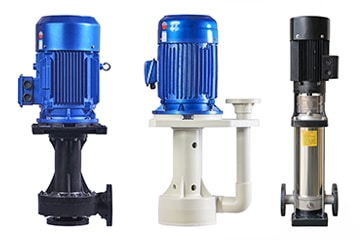
Centrifugal pumps: Centrifugal pumps commonly used in applications requiring high flow rates and low-pressure heads, such as raw water transfer and water purification systems. They are suitable for most water treatment applications and are highly efficient and simple to maintain.
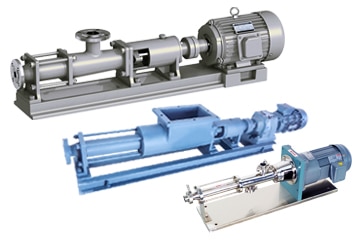
Progressive cavity pumps: Progressive cavity pumps are suitable for transferring viscous liquids or liquids containing solid particles, such as sewage and sludge treatment. These pumps provide a constant flow rate and are suitable for high viscosity and high solids content media.
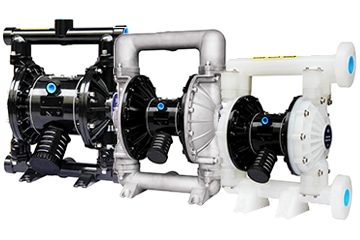
Diaphragm pumps: Diaphragm pumps for handling applications containing corrosive chemicals or where precise flow control is required. Suitable where high accuracy and chemical resistance are required.
Submersible pumps: Mainly used for handling groundwater or deep well pumping, suitable for applications where air needs to be prevented from entering the system.
Piston pumps: Suitable for high-pressure, low-flow applications such as chemical dosing and pressurized water supply systems.
Summary
Flow unit conversion is an essential skill for water treatment and pumping equipment professionals. By understanding and applying the conversion from m³/min to cfm, you can better design, manage, and optimize your water treatment system to improve system efficiency.
AOBL Pumps offers a wide variety of pump products to meet the needs of different customers. The pumps are available in a full range of sizes, capacities and materials for a variety of application scenarios. With a range of industrial products such as chemical pumps, EODD pumps, filter press feed pumps, and pulsation dampers, contact us to develop a program for you.