

What Is Pseudoplastic Fluid?
Pseudoplastic fluids, also known as shear-thinning fluids, are non-Newtonian fluids whose viscosity decreases as shear force or flow speed increases. These fluids are widely used in industries such as wastewater treatment, food processing, cosmetics, chemicals, and coatings because they become easier to pump and process under flow conditions.
Pseudo-plastic fluids are a type of non-Newtonian fluid whose viscosity decreases as the shear rate increases, making them easier to flow when stirred, pumped, or extruded. These fluids are also commonly referred to as shear-thinning fluids.
Common Pumping Challenges of Pseudoplastic Fluids
Pseudoplastic fluids may become easier to flow under shear, but they can still create processing challenges during pumping, dosing, and transfer.
- Flow instability at low shear conditions
- Difficult startup under high viscosity
- Shear-sensitive structure damage
- Air entrapment during dosing
- Pulsation in inaccurate pumping systems
- Pipe blockage when flow velocity is too low
- Reduced accuracy in high-viscosity dosing applications
Because viscosity changes dynamically during operation, selecting the wrong pump type may reduce efficiency and affect product consistency.
Why Do Buyers Care?
Because many real products do not flow like water. They may feel thick at rest, but become easier to move once force is applied, which matters for pumping, filling, spraying, and dispensing.
This behavior is especially useful in industries such as food, cosmetics, pharmaceuticals, coatings, and drilling fluids, where controlled flow improves process stability and user experience.

How Is It Different from a Newtonian Fluid?
In Newtonian fluids, viscosity remains nearly constant as shear conditions change; in pseudoplastic fluids, however, the apparent viscosity decreases at higher shear rates.
Simply put, when you apply greater force to a pseudoplastic fluid, it becomes “thinner”—the exact opposite of what happens with thixotropic or shear-thickening fluids.
This distinction is critical because product performance, pump selection, and filling behavior all depend on how viscosity changes during processing.
Which products behave this way?
Common examples include ketchup, toothpaste, mayonnaise, paints, polymer solutions, and many concentrated suspensions.
For example, when ketchup is squeezed, it flows more easily because the applied force increases the shear rate and temporarily reduces the apparent viscosity.
Brookfield also notes that many polymer solutions, polymer melts, paints, and coatings exhibit pseudoplastic behavior in practical applications.
How to Select the Right Pump for Pseudoplastic Fluids
When selecting a pump for pseudoplastic fluids, several factors should be considered:
If you work with pseudoplastic fluids such as ketchup, paint, coatings, or polymer solutions, AOBL products are designed to help you pump, transfer, and control flow more efficiently.

| Selection Factor | Why It Matters |
|---|---|
| Viscosity Range | Determines required torque and flow stability |
| Shear Sensitivity | Prevents damage to fluid structure |
| Solids Content | Affects clogging risk |
| Flow Accuracy | Important for dosing systems |
| Pressure Requirement | Impacts pump type selection |
| Temperature | Changes viscosity behavior |
| Corrosiveness | Determines wetted material selection |
Table of Select the Right Pump
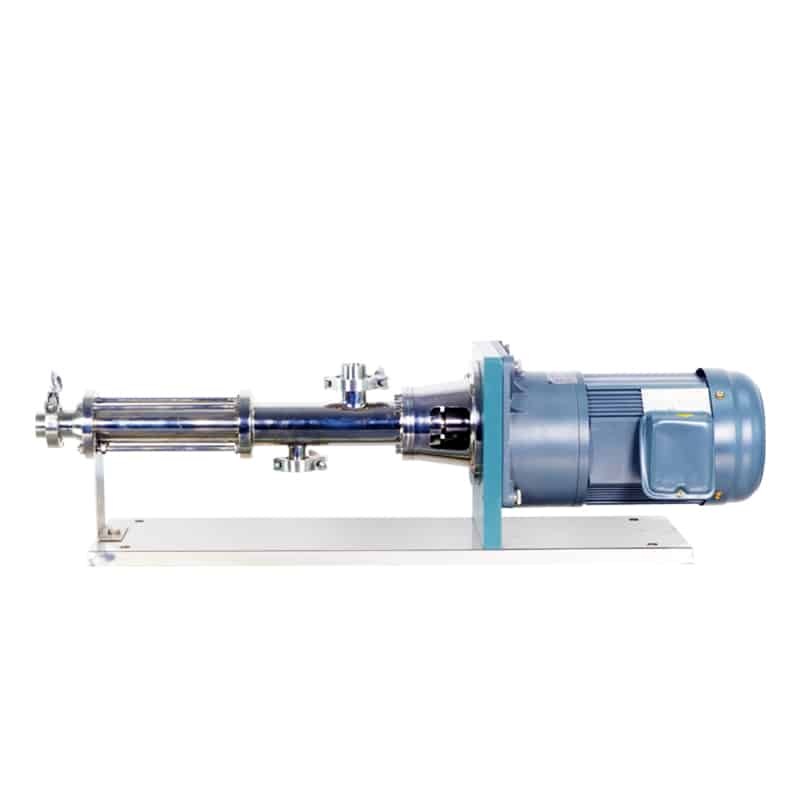
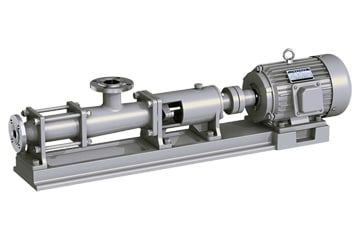
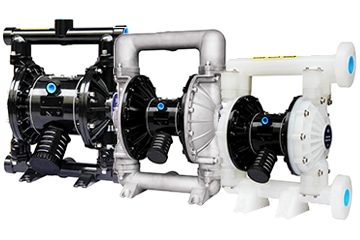
For high-viscosity and shear-sensitive applications, progressive cavity pumps, peristaltic pumps, and air-operated diaphragm pumps are commonly preferred.
Recommended AOBL Pump Solutions
| AOBL Product Type | Suitable Fluid | Main Advantage |
|---|---|---|
| Progressive Cavity Pump | High-viscosity polymer and sludge | Stable low-shear transfer |
| Diaphragm Metering Pump | Chemical dosing fluids | Accurate flow control |
| Peristaltic Pump | Abrasive or shear-sensitive fluids | Less clogging and gentle pumping |
| Air Operated Diaphragm Pump | Coatings and slurry | Handles solids and viscous media |
| Screw Pump | Thick industrial liquids | Continuous smooth flow |
Table of AOBL Pump Solutions

Why Are Pseudoplastic Fluids Easier to Pump at High Shear Rates?
This behavior happens because the internal structure of the fluid changes under force. When shear force increases, molecular chains or suspended particles begin to align in the flow direction, reducing internal resistance and lowering apparent viscosity.
As a result, the fluid flows more easily during pumping, mixing, spraying, or extrusion.
Summary
Pseudoplastic fluids are important in many industrial applications due to their unique shear-thinning behavior, which helps improve pumping and flow performance under operating conditions.
Contact AOBL to customize your solution.